
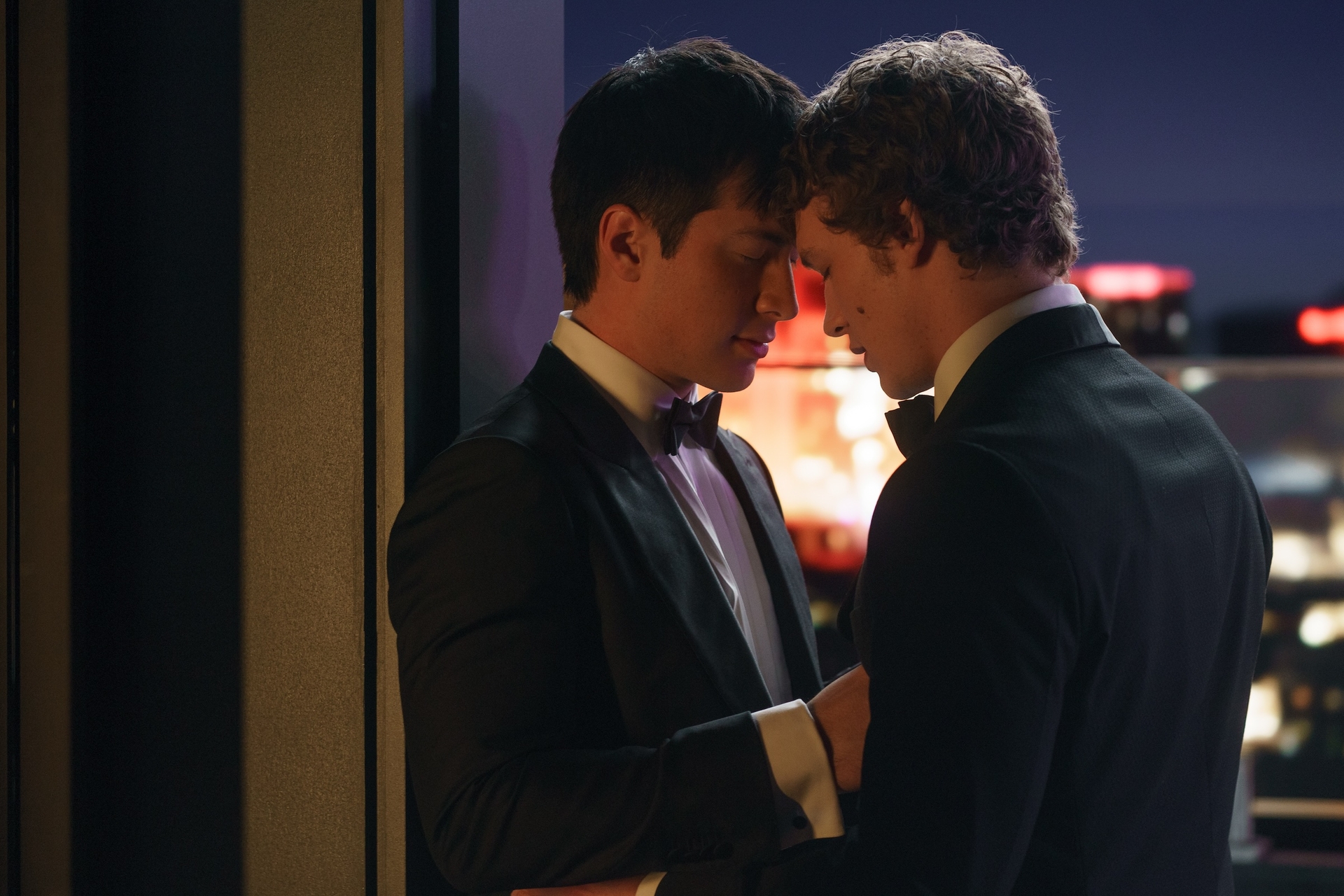
Canadian favorites Noah Reid, Carrie-Anne Moss and Hudson Williams are returning to screens today in a new thriller series adapted from Kat Sandler’s play “Yaga.”
The title of the play and series is a reference to the Eastern European folklore figure Baba Yaga. While children in Russia, Ukraine and Belarus grow up knowing about this mythical woman, North American audiences are a little less familiar with who she is, the iconography she’s associated with and the countless tales of her exploits.
So, to prepare for “Yaga,” we’re going to take a deep dive into the legend, where we’ve seen her across pop culture and how she figures into the plot of “Yaga,” which will air on Crave and AMC.

The legend
First, let’s take a look at the name. “Baba,” in traditional Russian culture, refers to a married woman old enough to have children. Today, it has a more unpleasant meaning and is used to describe a woman who is low class, slovenly, older and/or unattractive, according to an introduction by Sibelan Forrester in “Baba Yaga: The Wild Witch of the East in Russian Fairy Tales.”
The name “Yaga” has a less-clear etymological background and could variously relate to the Russian word for “riding,” the German word for “huntsman,” or words for horrifying or chilling in other Slavic languages.
Because she’s a figure drawn from many cultures and countries across centuries, it can be hard to pin down a singular definition of what she looks and acts like. There are hundreds, if not thousands, of stories about her, both written and spoken over the ages.
In some traditions, Baba Yaga is a name. In others, it’s more of a description—a person may be a baba yaga (a scary, old lady) or one of many baba yagas (usually three sisters or even grandmother, daughter and granddaughter).
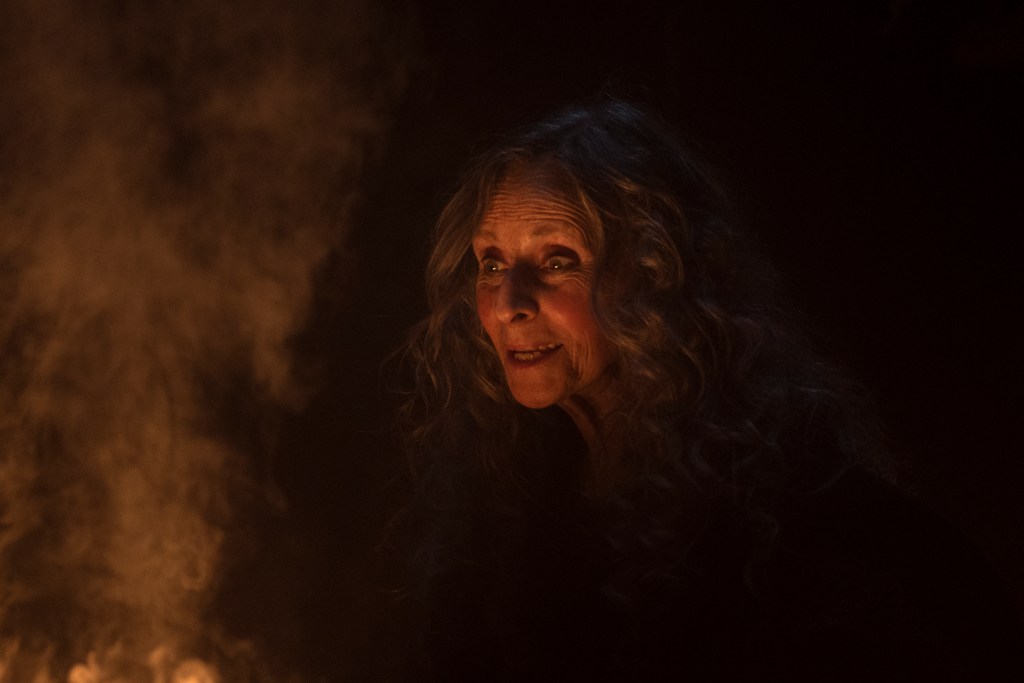
A Baba Yaga is typically portrayed as a witch, or someone with magical powers. She can be old and decrepit, or young and beautiful. She’s often sinister (eating children), but sometimes helpful (assisting a hero on a quest).
She usually lives in a run-down hut or cottage in the woods. The hut sits atop chicken legs, allowing it to move or turn around. Her position in the woods in a cabin with chicken legs shows her deep connection to nature and animals.
Baba Yaga’s home is sometimes surrounded by a fence made of bones, with skulls sitting atop the posts. She’s also known to fly in the sky in a mortar, using a pestle to maneuver. Sometimes she uses a broom to sweep away evidence of her travels.
She’s associated with many other objects in various stories, including horns, combs, mirrors, handkerchiefs and balls of thread.
Just like any characters you might be familiar with in fairy tales, folklore and mythology, Baba Yaga exists in stories to act as a boogeyman in cautionary tales for children. She may also serve to test a hero to determine if they will succeed in their adventure. She acts as a figure in rites of passage. Ultimately, she’s both good and bad—or neither—wise and cruel, a feminist, and someone who’s connected to nature.
Baba Yaga in pop culture
Baba Yaga is as common as your favorite childhood characters in books and TV in Russia and other Slavic countries. Not so much in North America, but we’ve seen her in bits and pieces of pop culture.
She inspired the character Voleth Meir, or the Deathless Mother, in Season 2 of “The Witcher.” Adapted from the books by Polish author Andrzej Sapkowski, Voleth Meir is an evil creature that witchers entombed in her hut to keep her from hurting humans.
In this story, she’s actually a dark elf that takes the appearance of an old woman, but much of the visuals used in the show point to Baba Yaga as an inspiration. Voleth Meir lives in an old hut in the middle of the woods that stands on basilisk legs, for instance.
In Season 2 of “The Witcher,” the sorceresses Yennefer (Anya Chalotra) and Fringilla (Mimi M. Khayisa), and the eleven Queen Francesca (Mecia Simson) seek out Voleth Meir, each seeking something they desperately need.
They even speak the traditional magical words used to summon Baba Yaga from her hut: “Turn your back to the forest. Hut, hut. Turn your front to me. Hut, hut.
In the John Wick films starring Keanu Reeves, the main character is a legendary assassin thought to be a sort of boogeyman to his enemies. Because of this, the Russian crime boss calls him Baba Yaga.
She also makes an appearance in the 2019 film “Hellboy,” played by Emma Tate and Troy James. Her character was a villain in multiple Dark Horse comic books connected to the anti-hero.
You can also find her in an episode of the children’s cartoon “Arthur,” the animated “Bartok the Magnificent” (a spinoff of “Anastasia”) and “DC’s Legends of Tomorrow.”
Baba Yaga in ‘Yaga’
Warning: major spoilers ahead!
If you haven’t read the play or watched the series yet, you might want to avoid this next section. The particular Baba Yaga story that serves as inspiration for Sandler’s play hints at what’s to come in the twist ending of the story. Proceed with caution.
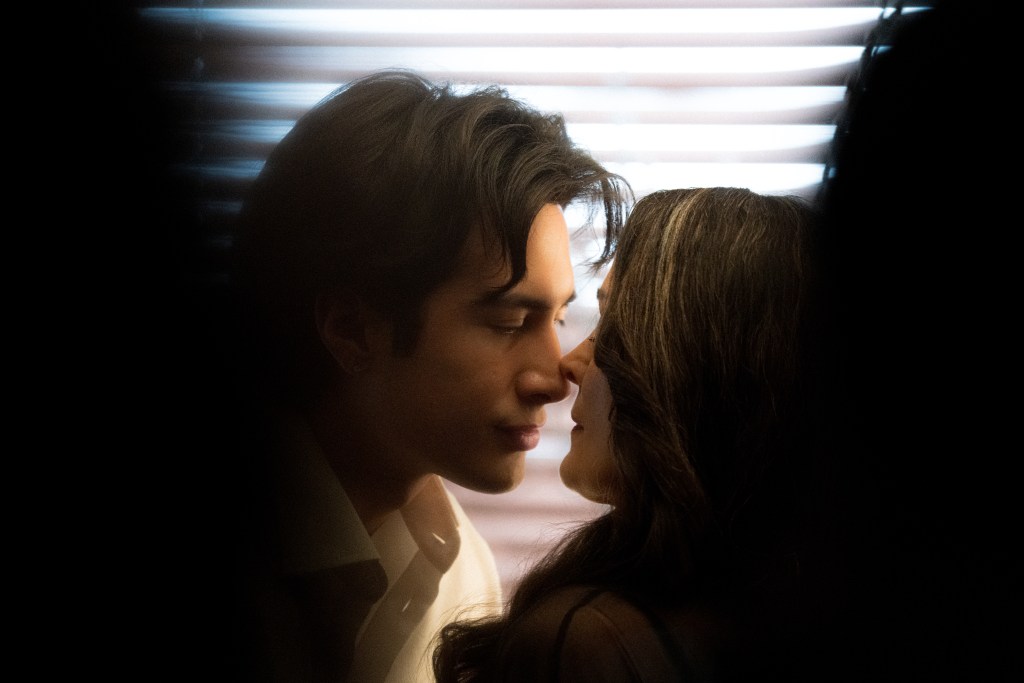
In the play, Reid’s character, a private detective named Rapp, tells another character one of the many tales of Baba Yaga about Ivan the Bold. He’s investigating the apparent disappearance of Henry (Hudson Williams), the son of a wealthy family. Before his disappearance, Henry recorded a podcast about Baba Yaga with Katherine, a professor with whom he has an affair.
This Baba Yaga tale is published in Forrester’s book under the title “The Tsar-Maiden.” In it, Ivan meets a beautiful maiden he falls in love with and promises to marry. Ivan’s stepmother, however, intervenes to keep the two lovers apart, so Ivan goes on a quest to find the maiden and make her fall in love with him again.
Ivan comes across a baba yaga in the woods who tells him she doesn’t know where the maiden is, but to ask her sister. He finds the second baba yaga, who tells him he must ask a third sister. She warns him the third sister might try to eat him and if she does, he has to ask her for horns, which he can use to summon the firebird (or phoenix) to save him.
Just as he was warned, the third baba yaga decides she wants to eat Ivan, so he asks for the horns and is whisked away to safety. He finds his maiden and is able to win her love again.
“Yaga” isn’t really a supernatural or witchy show—mostly. But some of the characters appear to take inspiration from this story and the idea of Baba Yaga being a combination of three women who alternatively seek to harm and/or help men. I won’t delve much further into that connection at the risk of spoiling the TV series even more, but suffice it to say, the full feminine rage of Baba Yaga is sure to be on display in the show.
About the writer
Danielle Haynes is the co-founder and co-editor of Booked & Screened, covering book-to-screen adaptations, film and TV development. She recently read “Yaga” and can’t stop thinking about it. It’s a play so it’s quick; should take you a few hours at most.



Leave a Reply