
“Little House on the Prairie” has been adapted to the screen two times, over 50 years apart. Both the pilot movie that got picked up for the 1974 series and the first season of the Netflix adaptation were based on the third book in the Little House series by Laura Ingalls Wilder. Each version depicts the late 19th century but was created for different audiences.
By looking at how the creators behind each version depicted the Ingalls family—Laura, Mary, Caroline and Charles—we can see a reflection of society’s changing views of gender. How has “Little House” changed its portrayal of gender over nearly 100 years—and what about Laura has stayed the same?
The book
The 1932 children’s novel looks at the Ingalls’ new life on the prairie in Kansas, showing their journey from the big woods in Wisconsin and the events leading up to their eventual move to Walnut Grove in Minnesota.
Laura is depicted as a curious young girl who tries her best to conform to the gendered expectations of the day, reminding herself of the rules when she wants to speak up and staying complicit when her parents tell her to be a lady. This version of Laura is the most tame version, with both adaptations allowing her more autonomy than in the books. Her sister Mary has a much easier time conforming to the expectations of her. When Laura wants to watch Pa and Mr. Scott build the well, Mary is content with staying inside to work on her quilt and watch their little sister Carrie.
Caroline and Charles appear to have a healthy and equal relationship for the time, with Caroline mostly doing domestic labor and Charles doing manual labor, though they both have equal authority over the children and Caroline occasionally helps her husband with projects like when she helped build the house.
The 1974 movie
The 1974 movie served as the pilot to the original TV series, which aired from 1974 to 1983 on NBC. This adaptation closely follows the events of the book, with some differences such as adding in some scenes with just the parents or other adults. The characterization of Laura is relatively unchanged and feels true to the books. The other family members are also similar to that of the books.
Laura is reminded of her behavior and manners throughout this adaptation and the book. Early on in both, she is reminded by her mother of table manners, being told “you must mind your manners, even if we are a hundred miles from anywhere” in the book, with a similar message in the movie of “there’s no need to forget your manners, just because we’re hundreds of miles from civilized folk.” This same interaction is absent from the 2026 Netflix adaptation.
The series starred Melissa Gilbert as Laura, Melissa Sue Anderson as Mary, Michael Landon as Charles, Karen Grassle as Caroline, and twins Lindsay and Sidney Greenbush as Carrie.
The first season of the series is based on later books in the series, starting when the Ingalls reach Walnut Grove.
The Netflix series
This 2026 version is vastly different from the original source material and the 1974 movie. The Ingalls are closer to Independence and regularly venture into town, with the first season more closely resembling the first season of the 1974 series, which was centered on the beginning of their time in Walnut Grove.
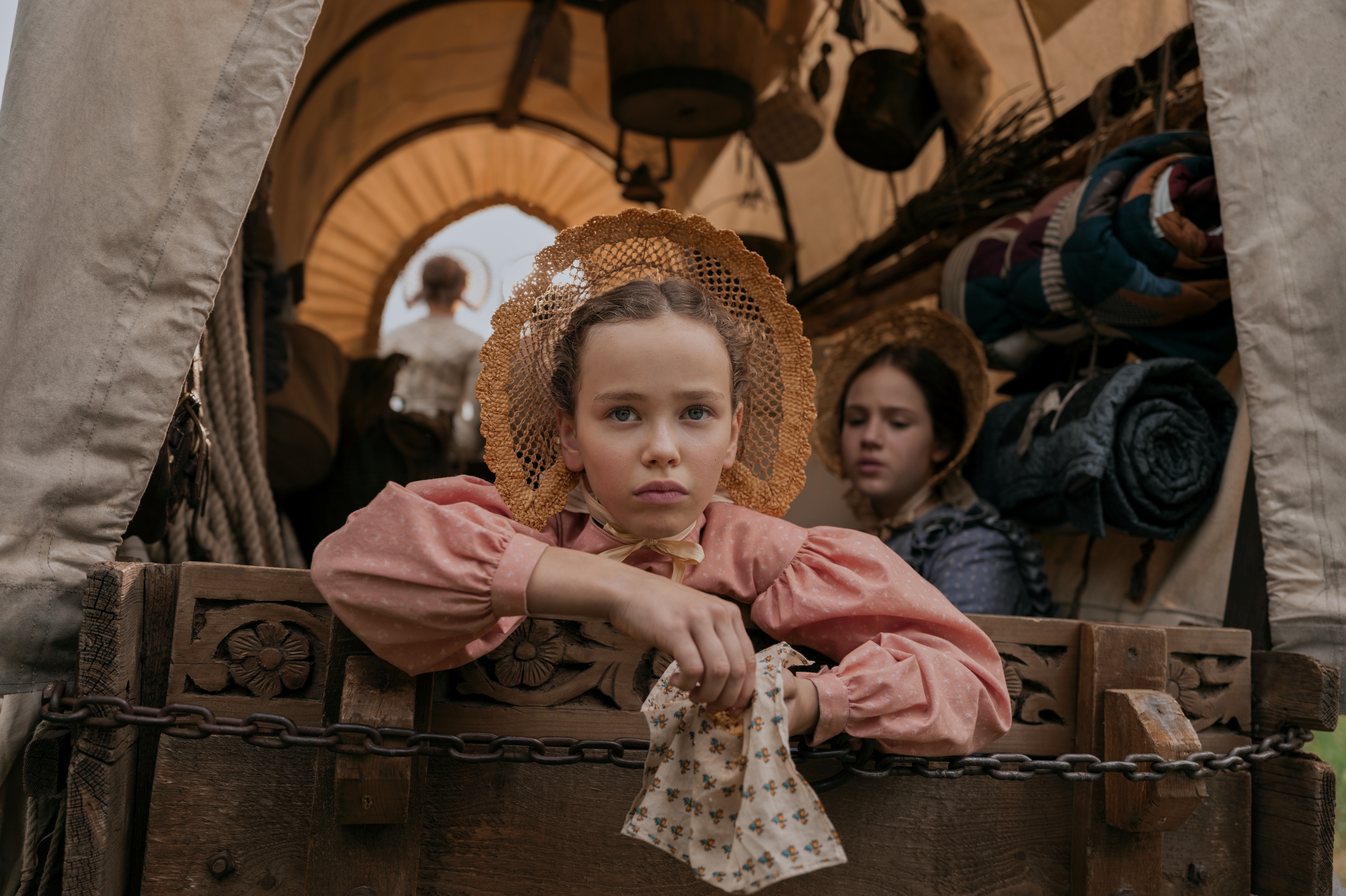
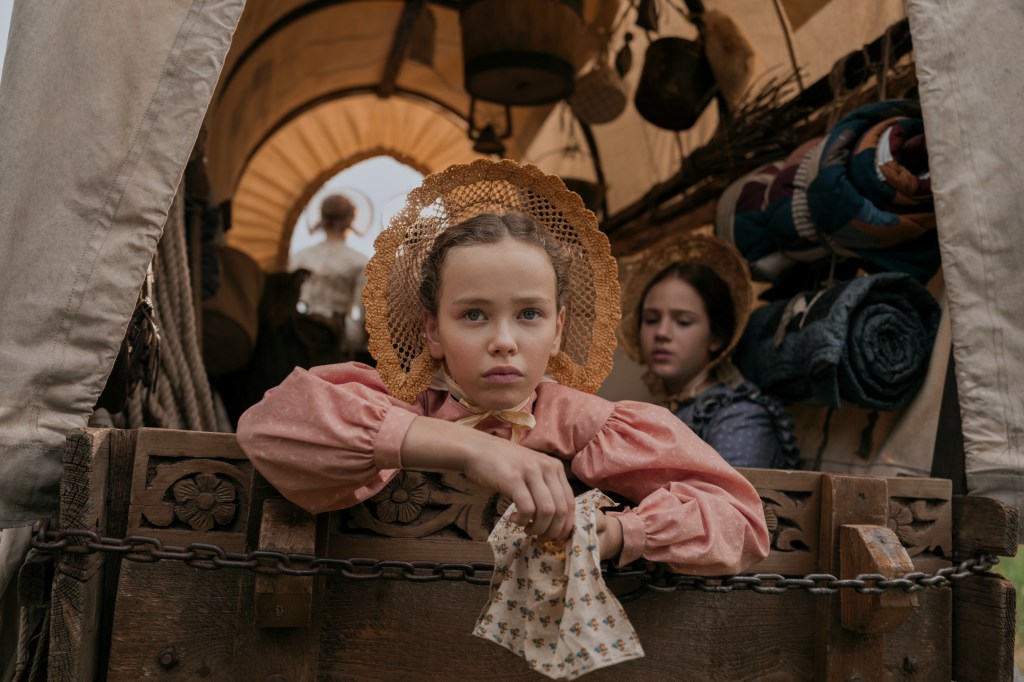
The female characters have much more agency than in the previous iterations, giving Caroline (Crosby Fitzgerlad) more to do with the women’s society and leaning into Laura’s (Alice Halsey) curious and adventurous nature. Mary (Skywalker Hughes) is the most similar of the three women to her book and movie counterparts.
Charles (Luke Bracey) is also similar to that of his previous iterations, with the roles of both him and Caroline as parents remaining relatively unchanged.
The new series attempts to give the Ingalls women more to do in its first season, allowing them to make more of their own choices sooner than Walnut Grove.
In one scene, Laura and Mary are having a playdate with Jemma (Mary Holland)’s twin daughters, while Caroline and the other women of town have a women’s society meeting. Laura has a hard time minding her manners and acting as a politie lady of society, with Mary feeling embarrassed and having to cover for her younger sister’s behavior. At one point of the visit, Laura discovers several drawings of Native Americans belonging to the twins’ father. Laura then talks about the meaning behind the drawings and native culture. The twins get very interested in what Laura has to say and she is able to tell them stories of her encounters and her best friend Good Eagle (Wren Zhawenim Gotts).
Laura’s performance of gender in this adaptation allows her more autonomy and confidence, veering away from the book and 1974 version where she is quieter.
About the writer
Carissa Shellenberger likes to watch the 1974 series with her mom and watched the first season of the new series with her when it came out. She likes how the new series is expanding on the parts the other versions left out, even though it is not as book accurate. This was her first time reading the book both series are based on, and enjoyed how book accurate the original movie was.



Leave a Reply