
As the end credits rolled on “No Time To Die,” the familiar words “James Bond Will Return” appeared on screen. But for once, as a lifelong devoted Bond fan, they failed to reassure me—would he actually return?
Daniel Craig was done with the character, and the franchise’s longstanding producers were rumored to be selling the property. Not exactly the best-case scenario for the future of one of cinema and literature’s most enduring heroes. But after a five-year hiatus, Amazon’s acquisition of the IP and a seemingly endless rumor mill, Robert Pattinson has finally been announced as the official new James Bond. The announcement has made headlines the world over and proven, yet again, that James Bond will return. It also reminds us that 007 is no stranger to adversity.
There have been plenty of close calls for him since author Ian Fleming debuted the elegant spy in the 1953 novel “Casino Royale.” But after four subsequent books, Fleming’s interest in the character waned and left his fate uncertain at the end of 1957’s “From Russia With Love,” which sees Bond poisoned and die in a surprise cliffhanger. Fleming returned to the series only a year later however with “Dr. No,” which would become the basis for the first feature film adaptation starring Sean Connery in 1962.
Connery’s tenure in the role is nothing short of iconic. Long before “Jaws” and “Star Wars,” his Bond was the first true blockbuster and a pop culture craze rivaled only by the Beatlemania of the 1960s.
His portrayal of Bond defined manliness and style for a generation, a combination of refinement, grit and raw sex appeal that took the world by storm. But after an exhausting five films, Connery relinquished the role, and the search for the first new James Bond began, ushering in another cliffhanger—could anyone but Connery deliver in such a high-profile role?
Australian George Lazenby was the first to try in what many saw as a poor imitation of Connery. Audiences failed to connect with 1967’s “On Her Majesty’s Secret Service,” and although time would eventually vindicate Lazenby, the film disappointed at the box office. To correct course, the producers instead signed Roger Moore to helm the series in 1973.
Pivoting from the hard-nosed masculinity of Fleming’s literary Bond, Moore’s 007 was typified by romance, cheekiness and wit. High in entertainment value and boasting increasingly outlandish productions (including a trip to outer space in 1979’s “Moonraker”), Moore was the first to successfully redefine the role of James Bond and make it his own for the next generation of fans.
Over seven films, Moore charmed audiences who grew accustomed to a lighter, campier brand of Bond until his departure in 1985. Roger was my first Bond, so I will always have a soft spot for him.
Promising to return to the cold-blooded killer of Fleming’s original design, Timothy Dalton introduced a brooding to the super spy at the same time that writers of the franchise were running out of original Fleming texts to adapt. What resulted was a two-movie tenure of an edgier Bond that audiences of the late 80’s were ill-prepared for.
Dalton’s performance proved too far ahead of its time, triggering a lengthy sabbatical whereupon the franchise was handed to the next generation of producers.
Coinciding with the end of the Cold War, shifting cultural trends and the rise of numerous competing action series, serious doubt arose that Bond could surmount such imposing obstacles.
Then in 1995, Pierce Brosnan and Co. brought Bond soaring back with the smash hit “Goldeneye.” Finding a middle ground between Moore’s affability and Connery’s machismo, Brosnan’s 007 ushered James Bond far beyond his literary roots and into the new millennium with original stories and characters untethered to Fleming’s creations. His subsequent films quickly drifted back into shockingly campy territory despite Brosnan’s efforts to ground them, and the producers unceremoniously parted ways with the handsome Irishman in 2002 to find another new direction.
Looking to bring James Bond back to basics, they did so by finally adapting the original Bond adventure, “Casino Royale.” Casting Daniel Craig in the role sent shockwaves through the world press, who utterly panned the unconventional choice and decried certain doom yet again. But the naysayers were silenced upon the film’s release, which stunned audiences with its lush visual style, exhilarating action and surprising emotional depth.
Craig’s Bond was the closest yet to Fleming’s original character—a hard-drinking, ice-cold killer whose gruff exterior was the result of betrayal and personal tragedy. Finally, someone had managed to humanize Bond without losing the extravagance and escapism that had become the franchise’s brand. Disparagers dubbed him the “trauma Bond” and longed for a return to the campier escapades of films past, but it didn’t stop Craig’s tenure from becoming the most successful in franchise history.
Personally, I was thrilled to receive new, more in-depth explorations of the character after so many variations on the same old formula. But as the self-contained continuity of the Craig era wound to a close, I was left to ponder what new horizon existed for my favorite super spy. With Amazon now in control of the IP, the thought of a corporate entity producing Bond films by committee hardly inspired confidence. Consistent stewardship and tight creative control have successfully seen Bond through many peaks and valleys over the years, so what can we expect from a franchise liberated from such constraints?
With yesterday’s announcement, we have our first glimpse of this new potential future. Director Denis Villeneuve has proven himself a trustworthy and respectable filmmaker with original stories like “Prisoners” and “Sicario,” as well as acclaimed adaptations of major franchises “Blade Runner” and “Dune.” The scale of his productions is certainly on par with a massive, globe-trotting Bond adventure, and his thematic interests underpin his characters with resonant performances that are as grand as they are nuanced.
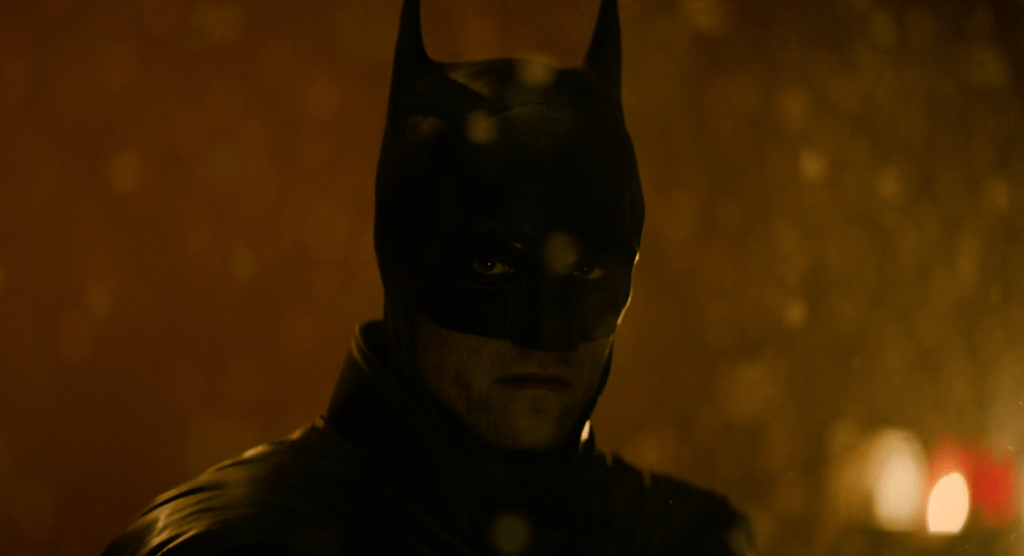
Robert Pattinson, for his part, has remained a steadfastly unique presence over the course of his varied career. Boasting as many oddball indies as major tentpole appearances, he is an actor committed to ingenuity and unpredictability who is sure to bring something exciting to the baccarat table.
After languishing in uncertainty for years and wondering if my beloved franchise would suffer the fate of becoming a mere tax write off, I’m heartened by the recent announcement. Whatever is to come of this new project, all I can expect is the unexpected. And after 60 years, 25 films, and six actors, something unexpected is just what James Bond needs most.
About the writer
Scott DuVall is a film projectionist and cinematographer living in Los Angeles. He studied filmmaking at the UNC School of the Arts and considers himself a lifelong cinephile. His favorite James Bond film will always be “From Russia With Love.” His reviews and ranked lists can be found on Letterboxd at https://letterboxd.com/fightingpickle7.




Leave a Reply