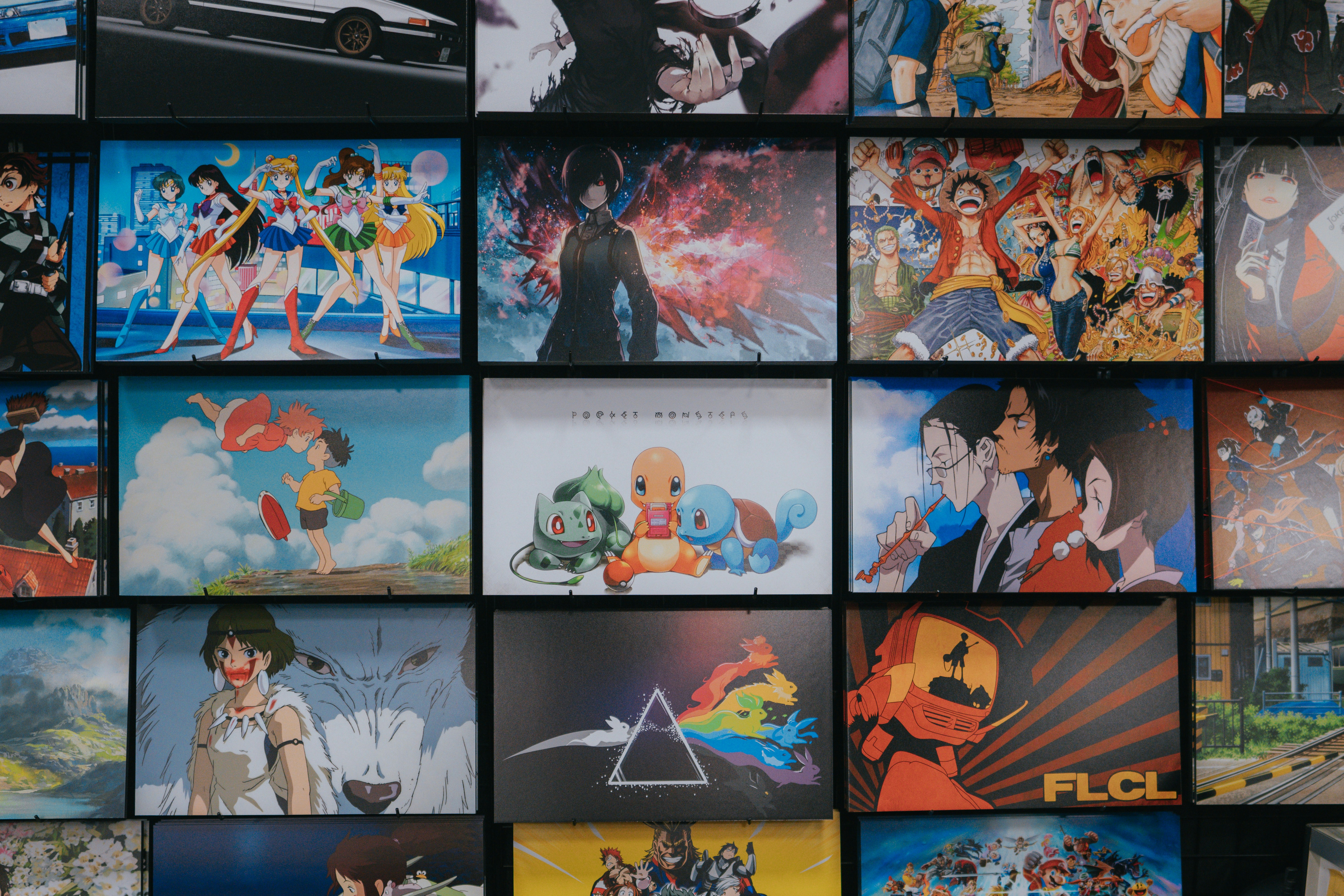
Greetings, aspiring otaku (see definition below), it is I, sensei Ben, your guide on this journey to anime and manga literacy. The worlds of Japanese animation and comic books are vast and can be intimidating to the uninitiated (especially if you, like me, suddenly decided to get into it in your late 30s or early 40s).
Let’s begin with a glossary of terms.
ANIME: In Japan, this is literally just a shortened form of “animation” (it’s an oft-repeated meme that in Japan, “King of the Hill” is considered an anime). In the rest of the world, however, it refers primarily to animated movies and TV series made in Japan. It is also sometimes used in reference to works of Western animation that imitate the Japanese style (such as “Avatar: The Last Airbender”).
MANGA: Comic books and graphic novels originating from Japan. Typically, these are printed to be read from right to left, the opposite direction of Western comics. I know it sounds jarring, but you get used to it fast.
LIGHT NOVEL: Whereas manga tells stories through words and sequential art, a light novel is a prose book that often features multiple illustrations. Many popular light novels, such as “Sword Art Online,” went on to be adapted into manga and anime.
KODOMO/KODOMOMUKE: Anime and manga aimed at children. The most prominent example you’ve probably already heard of is “Pokémon.”
SHONEN/SHOUNEN: Anime and manga aimed at an adolescent male audience. Examples include “Dragonball Z,” “Naruto” and “One Piece.”
SEINEN: Anime and manga aimed toward an adult male audience. These include “Vinland Saga,” “Berserk” and “Tokyo Ghoul.”
SHOJO/SHOUJO: Anime and manga aimed at an adolescent female audience. Examples include “Sailor Moon,” “Fruits Basket” and “Ouran High School Host Club.”
JOSEI: Anime and manga aimed at an adult female audience. These include “Paradise Kiss,” “Honey and Clover” and “Nodame Cantabile.”
SHONEN-AI/YAOI: Also known as “boys’ love,” or “BL,” this refers to manga and anime featuring romantic or sexual relationships between two men. “Yaoi” often–but not always–refers to more sexually explicit content.
SHOJO-AI/YURI: Also known as “girls’ love,” or “GL,” this refers to manga and anime featuring romantic or sexual relationships between two women. “Yuri” often—but not always—refers to more sexually explicit content.
MANGAKA: The creator who wrote and/or drew the manga.
TANKŌBON: A paperback collection of a serialized manga, what you would most often find at a library or bookstore. Many of the most popular manga titles are serialized in magazines before being collected in tankōbons.
COUR: A block of TV episodes covering a period of three months—one for each season: spring, summer, fall and winter. A cour will contain a block of episodes that were produced at the same time, not necessarily an entire season of TV. A full season of “Attack on Titan,” for example, might be spread out over multiple cours.
OVA: Short for “original video animation,” this is anime content produced specifically for the video/DVD market, rather than for TV or cinematic release.
FANSERVICE: Also known as “ecchi” content, “fanservice” doesn’t have the same connotation as in Western media. When someone says a “Star Wars” project “has a lot of fanservice,” they might mean gratuitous Yoda cameos, whereas in anime it means gratuitous sexual imagery or innuendo, often played for humor.
OTAKU: Fans of anime and manga. This word, the rough equivalent of “nerd” or “geek” in English, was originally a derisive term for anime and manga fans, but has since been reclaimed.
WEEABOO: Often shortened to “weeb,” this is popular Internet slang for a Western person (most often, but not always, white) whose obsession with Japanese culture veers into the category of obnoxious.
OK, so where do I start?
Many streaming services, including Netflix and HBO MAX, have wide selections of anime, and some exclusive titles. But for the greatest selection, the Crunchyroll and HIDIVE apps are your best bet. Both of these apps allow you to sort by genre—anything from science fiction to high fantasy to slice-of-life romantic comedy. If it’s a genre of fiction, there’s probably at least one anime show or manga series that fits the bill.
If this is all a bit intimidating, here are some recommendations for beginners:
Studio Ghibli
You really can’t go wrong with a Studio Ghibli movie. They’re like Japan’s answer to Disney animation, if Disney had never released a single dud (looking at you, “Chicken Little”). “Kiki’s Delivery Service,” which was based on a 1985 book by Eiko Kadono and “Spirited Away,” which was partly inspired by the 1975 novel “The Village Beyond the Mist,” by Sachiko Kashiwab, are perfect all-ages films.
Some Ghibli films, such as “Nausicaä of the Valley of the Wind,” are based on manga, and others have manga adaptations that came out after the films. Just don’t start with “Grave of the Fireflies” (based on a novella by Akiyuki Nosaka) unless you want to spend the next week crying. All Studio Ghibli movies are streaming on HBO Max.
‘Fullmetal Alchemist: Brotherhood‘
One of the most popular and highly regarded anime shows, this 64-episode urban fantasy series follows brothers Alphonse and Edward, powerful alchemists (magic users) who stumble upon a vast conspiracy while attempting to right a wrong from their past.
The anime is based on the manga series “Fullmetal Alchemist,” by Hiromu Arakawa, and was originally adapted into an anime of the same name, but was remade as “Fullmetal Alchemist: Brotherhood” to remain more faithful to the manga (the first anime was made when the manga was only half-done, so latter episodes and the ending are radically different). Streaming on Crunchyroll, Hulu, Netflix and Prime Video.
‘My Hero Academia” and “One-Punch Man‘
If you are looking for a segue from Western superhero comics to anime and manga, these are the top titles I’d recommend.
“My Hero Academia” (manga by Kōhei Horikoshi) follows the students at U.A. High School, an academy for aspiring heroes in a world where almost everyone is born with superpowers. Incoming freshman Izuku Midoriya is one of the small minority born without a “quirk,” but he won’t let that stop him from becoming the world’s greatest hero. Streaming on Netflix, Hulu and Crunchyroll.
“One-Punch Man” (manga by ONE and Yusuke Murata) is a super hero comedy about Saitama, a man who becomes a super hero “for fun” but quickly discovers he has a unique problem: he wins every fight with a single punch, preventing him from ever having a satisfying fight. Streaming on Hulu and Crunchyroll.
‘Frieren: Beyond Journey’s End‘
If you love high fantasy like “Lord of the Rings,” this is the manga/anime for you. “Frieren: Beyond Journey’s End” (manga written by Kanehito Yamada, illustrated by Tsukasa Abe), follows an elf mage named Frieren in the years after she and her friends defeated the nefarious Demon King. As a near-immortal elf, she lives to see her human friends get old and die, and starts to regret not putting in more effort to connect with them during the time they spent together.
She sets off on a new journey, picking up new adventurers along the way, as she tries to learn more about the friends she lost and connect with her new comrades. Streaming on Hulu, Netflix and Crunchyroll.
About the writer:
Ben Hooper started watching anime seriously during COVID, and only started reading manga a few months ago, but he’s already powered through more than a dozen series. He can’t recommend enough that you peruse the collection at your local library, it’s likely a manga goldmine.



Leave a Reply