

DC Studios’ “Supergirl,” directed by Craig Gillespie from a screenplay by Ana Nogueira, is something of an anomaly among mainstream comic book superhero films, in that it’s actually based on a comic book.
Supergirl
Director: Craig Gillespie
★
★
★
★
3
★
★
★
★
2.5
While Marvel efforts such as “Captain America: Civil War” pay tribute to iconic comic book storylines, the stories on the screen bear only superficial resemblances to their sequential art predecessors.
DC’s 2025 hit “Superman” took inspiration from multiple different comic book sources, but was largely an original story by writer-director James Gunn.
“Supergirl,” therefore, stands out as a more-or-less direct adaptation of the 2021-2022 comic book miniseries “Supergirl: Woman of Tomorrow,” by writer Tom King and artist Bilquis Evely. When this was announced, fans had good reason to be excited, as “Woman of Tomorrow” is one of the most beloved Supergirl stories in the character’s nearly 70-year history.
The result is … pretty good. Not quite great.
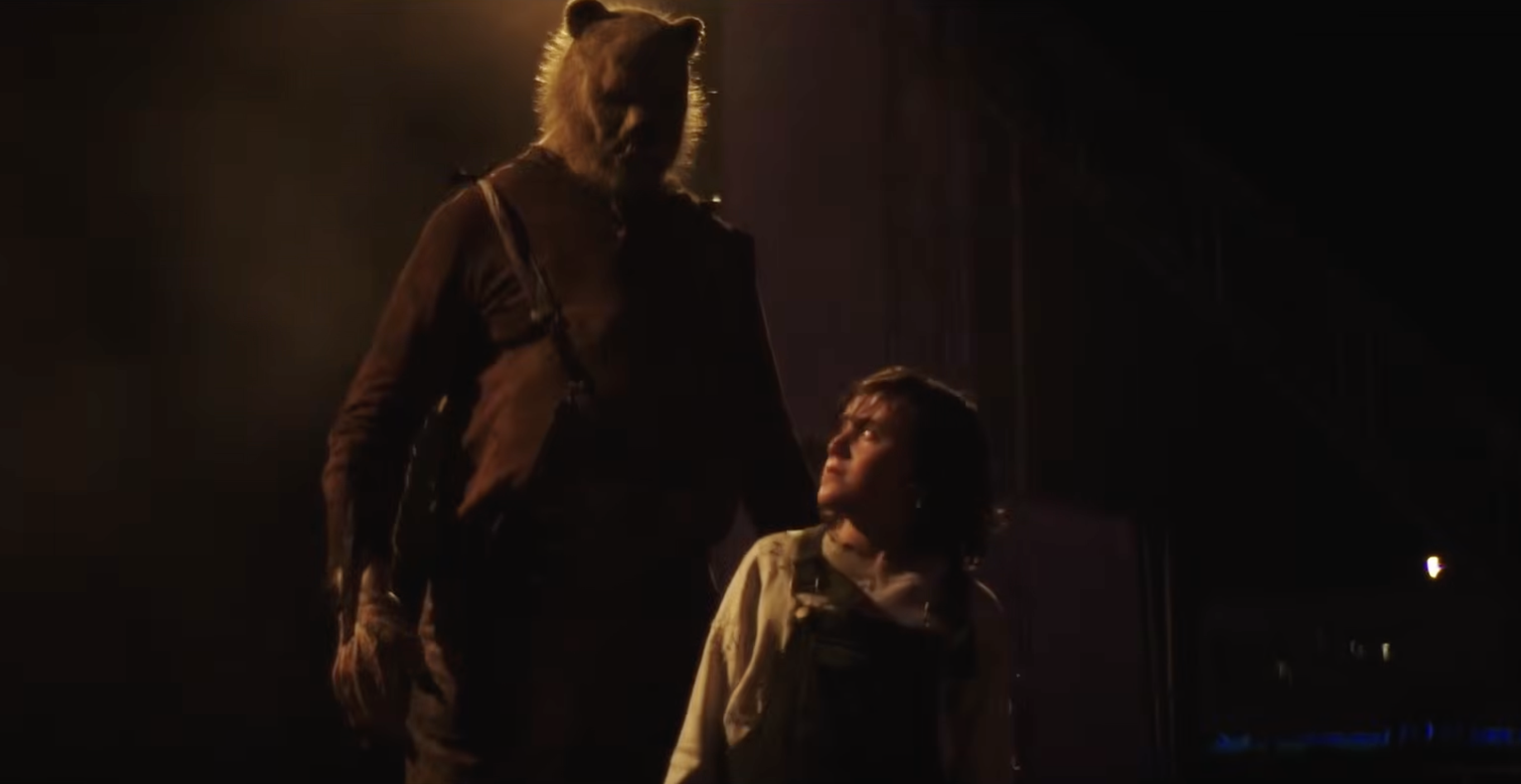
The film opens with Kara Zor-El, aka Supergirl (Milly Alcock), on an interstellar bender with her canine companion, Krypto, to celebrate her 23rd birthday (“Superman” viewers will recall that she can only feel the effects of alcohol when a red sun takes away her powers). Her call to action comes in the form of 13-year-old Ruthye Marye Knoll (Eve Ridley) who is seeking vengeance against the bedazzled space pirate Krem of the Yellow Hills (Matthias Schoenaerts) for the brutal murder of her family.
While Kara initially resolves to keep her distance from the conflict—“Not my monkeys, not my circus,” she says—she is drawn in against her will when Krem shoots Krypto with a poison dart, leaving her with only 72 hours to track the pirate down and steal the antidote.
What follows is, unfortunately, a bit predictable, even for those who aren’t familiar with the source comic. Will the roguish hero reluctantly team up with the precocious youngster to save the day and teach each other valuable life lessons about heroism and the futility of vengeance along the way? Take a guess.
That the story moves so cleanly from Point A to Point B to Point C isn’t necessarily a bad thing on its own—it is, after all, about the journey, not the destination—but aside from compelling performances, there isn’t much that makes “Supergirl” truly stand out from the now extremely crowded field of superhero fare.
Gillespie’s direction is competent, which isn’t quite a compliment given that his past filmography includes stellar entries such as “I, Tonya” and “Lars and the Real Girl.” He avoids the trap of bad CGI that so many modern films fall into, but manages this by largely being visually unambitious, which is really too bad given the stunning beauty of Evely’s artwork in the comic.
“Supergirl” had me at one point thinking of the similarly “pretty good” 2021 Marvel film “Shang-Chi and the Legend of the Ten Rings,” in that both films front-load their best action sequences, and said sequences both take place on a bus—although, in this case, it’s not a city bus, but a sort of space Greyhound.
The bus attack by Sklarian Raiders—a group of space pirates not to be confused with Krem’s Brigands—is not from the comic, nor does it significantly advance the plot, but the sequence is so much fun that I can’t bring myself to complain about it.
Unfortunately, from there on, the action sequences are largely flat and uninteresting—a series of very strong people punching, shooting and kicking each other in various, visually dull locations.
The creature design is also what I would disappointingly call “OK.” We’ve got a squid guy, a different kind of squid guy, some blue ladies and a handful of little furry guys, but none that I would predict to be destined for a lunchbox anytime soon.
Jason Momoa is clearly having the time of his life as Lobo, a cigar-chomping, motorcycle-riding intergalactic bounty hunter whose presence also marks a major departure from the source material. While his cartoonish demeanor brings some levity to the film’s dark story, the fact that he could be easily excised from the story without any major consequences leaves me wishing they had kept him as a brief cameo rather than a major supporting role in the movie’s second half.
Speaking of changes, I must admit there is one I wish they would have made to the “Woman of Tomorrow” story. A subplot about Krem’s Brigands being sex traffickers plays a major role in the comic book, but becomes more of a footnote in the movie. Having something that dark and disturbing be relegated to an afterthought without a final on-screen resolution leaves a very unfortunate and bitter aftertaste, especially in the post-Epstein climate.
The emotional heart of the film largely rests on Alcock’s shoulders, and the actress, despite her vocal contingent of misogynistic online haters, proves she is indisputably the right person to bring this version of Kara to life. She manages to bind Supergirl’s warring impulses of cynicism and desire to do good into a believable and compelling character.
Ridley, similarly, brings heart and humanity to her role. Despite my wariness of sci-fi that relies too heavily on child actors (various “Star Wars” projects have ruined my brain), Ridley turns in a standout performance.
David Corenswet’s scattered appearances as Superman also deserve praise, as he deftly pays Alcock back for her scene-stealing cameo at the end of his own film. One compliment I will pay Gillespie is the choice to have the film’s color palette—largely the grays and browns reminiscent of TV “Star Wars” or a “Mad Max” movie in space—noticeably brighten whenever Corenswet is on screen. The color contrast matches the one between Superman’s status as a beacon of hope and Supergirl’s as a cynical rogue with a heart of gold.
Krypto, sadly, is sidelined for the majority of the runtime, which might come as a disappointment to the plucky canine’s fans, especially given how heavily he played into the film’s marketing.
All in all, “Supergirl” is a flawed, but enjoyable way to spend 108 minutes. Gunn said he wanted his DC Universe to be creator-driven, with the visions of writers and directors taking precedence over any sort of MCU-like corporate style, but this first non-Gunn entry in the franchise ends up feeling more like Gunn-lite; an attempt to mix his “Superman” with “Guardians of the Galaxy,” and almost—but not quite—rising to the challenge.
About the author
Ben Hooper is still waiting for James Gunn to get back to him about his pitch for a film about his favorite DC comics character: Matter-Eater Lad, the lad who eats matter. James, if you are reading this, HMU.



Leave a Reply