
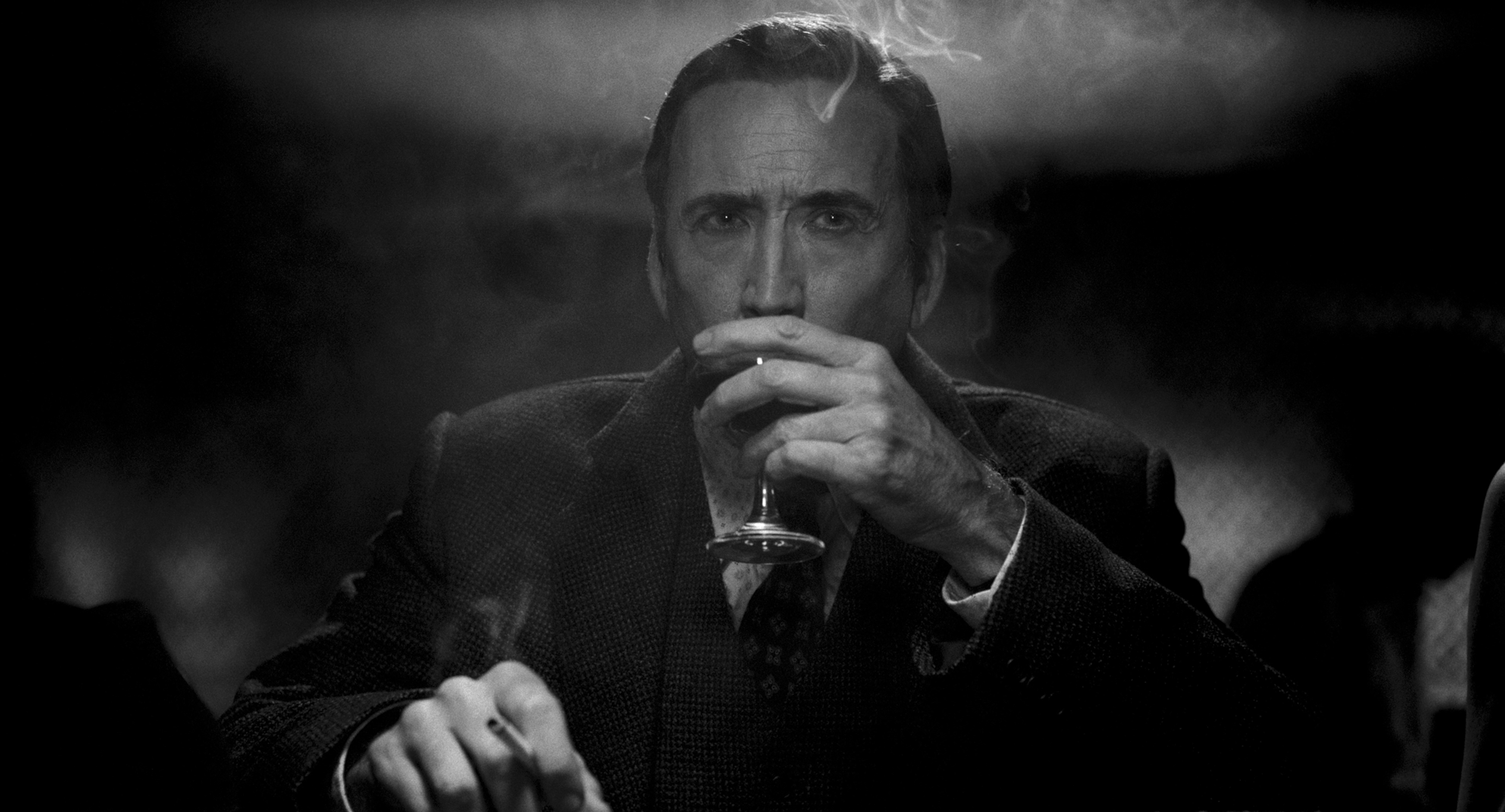
“Spider-Noir,” Sony’s latest attempt to find success in a Spider-Man-adjacent live action project, makes for a fun eight-episode binge-watch, so long as you don’t insist that your genre entertainment has anything of substance to say.
Spider-Noir
Developer: Oren Uziel
★
★
★
★
3.5
★
★
★
★
2
The Prime Video series ambitiously attempts to merge the genres of super hero adventure and classic film noir mystery, but the resulting product feels more like a typical super hero story wearing noir trappings as a costume. Sure, the classic tropes are all there—our hero is down on his luck, the femme is fatale, the mobsters are merciless, the politicians are corrupt and the camera angles are Dutch, but even watching in black & white (as opposed to the alternative “True Hue” color) fails to lend the series the feeling of film noir authenticity that could have elevated it from a fun take on the super hero genre to something truly unique and special.
Nicolas Cage is at his Nicolas Cagiest in the role of private investigator Ben Reilly, aka retired super hero The Spider (not Spider-Man, and, crucially, not the same Spider-Man Noir that Cage voiced in the “Spider-Verse” animated films). Equal parts Humphrey Bogart, James Cagney and (by Cage’s own admission) Bugs Bunny; the character’s odd physicality and affected vocal patterns do eventually make sense in the context of the show, and as a whole the performance works—mostly. Producer Phil Lord said Cage wanted to approach the role “like a spider pretending to be a person,” and if this is so, I’d have to admit the spider isn’t doing the most convincing job. Still, Cage is clearly having a lot of fun in the role, and I’d be lying if I said he wasn’t fun to watch.
Li Jun Li plays Cat Hardy, the femme fatale whose need for help threatens to pull Reilly out of super hero retirement. Li hits all the right notes (both metaphorically and literally) as the mysterious lounge singer who is equal parts alluring, strong-willed, vulnerable and untrustworthy. Unfortunately, the series’ writing fails to give Li anything truly interesting to do with the stock character she was handed (aside from a couple of memorable musical numbers).
Hardy’s case leads Reilly to discover he is no longer the only super-powered player in town, with mob enforcer Flint Marco (Jack Huston) having trouble controlling his ability to turn into sand. More so-called “freaks” continue to appear in the series, and all seem to have a mysterious connection to Reilly’s past.
The supporting cast is where “Spider-Noir” really shines. Reilly’s no-nonsense secretary Janet (a scene-stealing Karen Rodriguez) provides both comic relief and a voice of reason for her unpredictable boss.
Meanwhile, Robbie, played by the immensely talented Lamorne Morris (I don’t just say that because we went to college together), provides the strongest argument in favor of the series’ noir setting. Robbie, an honest journalist in a dishonest world, is the show’s most interesting character, and Morris stands apart as the only actor in the main cast who seems truly grounded in the noir setting, and his scenes feel like the only ones where “Spider-Noir” feels like true black & white cinema, rather than a mere tribute to the genre. It’s easy to imagine Morris as the center of his own hard-boiled, noir-inspired film or TV series (get on it, Bezos!).
There is a downside to this, however: while Morris and Cage do have chemistry in their scenes together, and their banter makes their friendship believable, the contrast between the actors’ approaches can make Cage’s more bombastic performance feel something more akin to a Holodeck episode of “Star Trek: The Next Generation” (Dixon Hill fans, sound off in the comments) than an authentic screen actor of the 1930s.
I’d be doing the series a disservice if I didn’t reserve some praise for Brendan Gleesan’s turn as the mob boss Silvermane—but, honestly, what do you expect from Brendan Gleesan? He’s an Oscar winner for a reason. Name a more no-brainer choice for the character of “Irish mob boss in 1930s New York,” I’ll wait. It would be nice if the series gave Gleesan more of a chance to show off his range, but the scripts are unfortunately too dedicated to hitting their chosen film noir tropes to waste time with things like “character development” for a villain.
Speaking of tropes, the series unfortunately has more of them than it does actual story beats. There’s a plot, sure, but the twists either come straight out of “The Big Book of Film Noir Cliches” (not a real book, sorry) or any of a dozen super hero films we’ve already seen. Still, the series moves along at a clip (aside from some minor dragging in the middle) and there’s enough witty dialogue and super powered action to keep viewers invested.
“Spider-Noir” is worth a watch if you enjoy super heroes, classic movies or the unhinged on-screen antics of Nicolas Cage, but if you aren’t predisposed to enjoy any of those, I doubt this series will change your mind. Having watched portions of the show in both black & white and “True Hue” full color, I have to recommend the black and white. The classic-style post-hoc colorization is a fun novelty (and it does have the advantage of the making the series’ stellar costume design really pop), but the visual aspect of the show really shines in black and white, which also has the added benefit of helping conceal some of the ropier uses of CGI.
Adaptation
“Spider-Noir” follows in the footsteps of a long line of comics-to-screen projects that take inspiration, rather than direct adaptation, from the comic books they are ostensibly based on. Sometimes this approach is for the better (here’s looking at you, “The Boys”), and sometimes it leads to outright disaster (what was “Madame Web” even trying to do?).
“Spider-Noir” falls somewhere in the middle. It plucks characters and visual elements from the original 2009 “Spider-Man: Noir” miniseries by David Hine and Fabrice Sapolsky, but leaves much of the complexity and themes on the cutting room floor.
The TV adaptation gives brief nods to the social issues of 1930s New York, such as institutional racism and the struggles of the Great Depression, but the comic book series was unabashedly political. Even fans of the “Spider-Verse” version of the character might find themselves asking, “When is he going to drink egg creams and punch Nazis?” I can see why, in the current political climate, Sony wouldn’t be interested in an avowed socialist Spider-Man who spends his days advocating for the disenfranchised and his nights battling Nazi eugenicists, but to them I simply say: “Cowards.”
This is a rare case where I would advise you to watch the show before you read the comic (and you really should read the comic).
About the author:
Ben Hooper didn’t realize until writing this review that two separate people that he went to two separate colleges with have been in streaming shows based on Marvel properties in the past two years. This information has him reevaluating some of his life choices. He must also admit that, despite the brief dig in this review, he actually really enjoys the insanity that is “Madame Web.” Is it good? No. Is it competently made? Also no. But is it fun to watch? You better believe it.




Leave a Reply