
Editor’s note: Page to Oscar is a recurring Booked & Screened series exploring Oscar-nominated and winning adapted screenplays—and how those stories make the leap from page to film.
This summer, Christopher Nolan is set to release his latest big-budget epic, an adaptation of Homer’s “The Odyssey” starring Matt Damon, Tom Holland and Anne Hathaway, among a slew of other Hollywood stars.
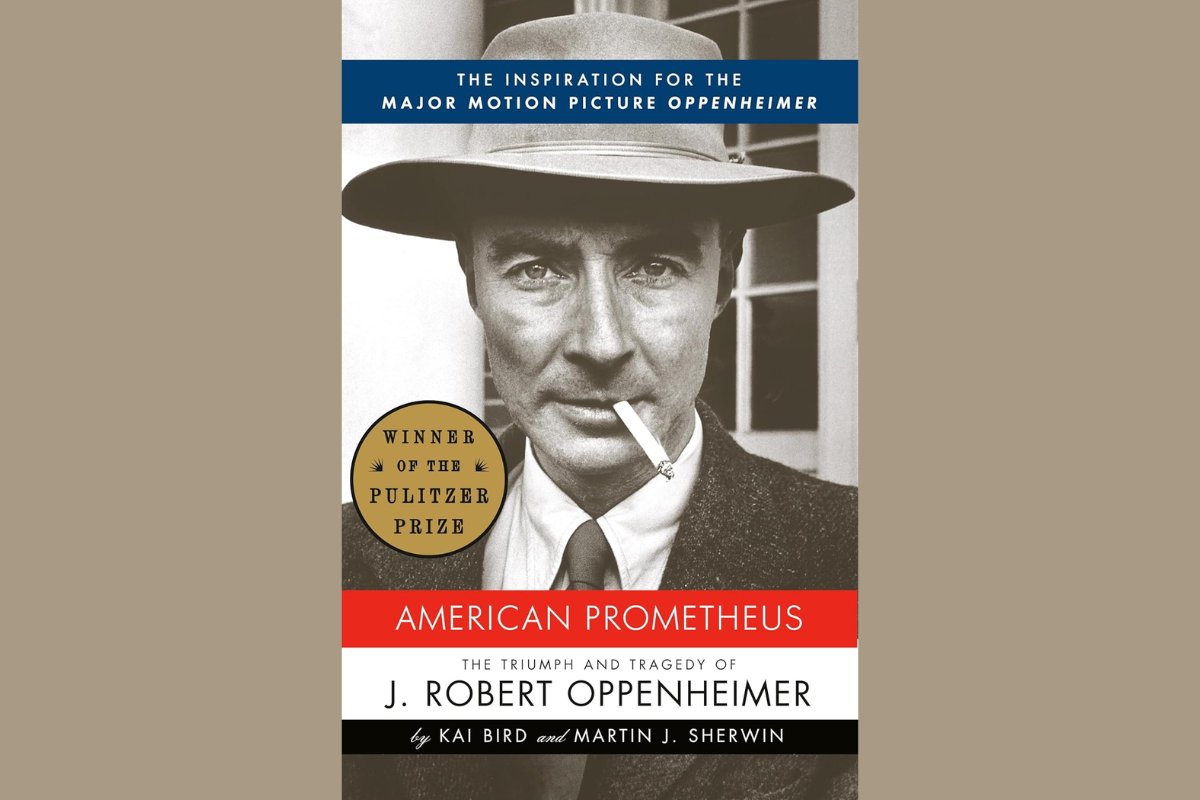
But it’s not the first time Nolan has dabbled in the world of larger-than-life, mythological—or nearly so—characters. His last blockbuster hit about the so-called “American Prometheus,” himself, Robert Oppenheimer, earned him the Best Picture and Best Director Oscars as well as a nomination for Best Adapted Screenplay.
“Oppenheimer” lost out in the screenplay category to “American Fiction,” based on the Percival Everett novel, but the sheer task of turning a 700-plus-page biographical book into one of the biggest hits of summer 2024 was something even the authors of the book thought would never happen.
Kai Bird, in a guest essay for The Hollywood Reporter in 2024, said that while he and co-author Martin J. Sherwin “had long hoped that our Oppenheimer biography might someday be turned into a film,” they had begun to doubt it would happen. He said the book had been optioned shortly after its release in 2005, but after a few failed attempts at scripts, multiple Hollywood filmmakers failed to get the job done.
Then Nolan decided to try his hand at taming the lengthy, dense book into a 3-hour movie.
Cole Haddon, a screenwriter and novelist who adapted 2013’s “Dracula” starring Jonathan Rhys Meyers, wrote in 2024 that Nolan succeeded with the “Oppenheimer” script by being “audaciously inventive” and blowing up all the rules.
Nolan split “Oppenheimer” into two parts—one from the perspective of the physicist as he works to develop the atomic bomb and its subsequent use, the second from the perspective of his rival, Rear Adm. Lewis Strauss as he faces a confirmation hearing in Congress that dissects his actions in stripping away Oppenheimer’s security clearance. Though the parts are interwoven, you can easily tell them apart visually as Oppenheimer’s story is told in color, while Strauss faces his grilling in black and white.
That split was also uniquely evident in the script, as Haddon shared in his Substack post. He shared the first page of the screenplay, which showed that much of Oppenheimer’s perspective was told in the first person, highly unusual in screenwriting, while the Strauss section was in the more typical third person.
Nolan “doesn’t just metaphorically place you in Oppenheimer’s shoes,” Haddon writes. “He drops you right in them and makes you experience the world through his confusing, contradictory, arrogant, terrified, guilty and even horny POV.”
It was a strategy Nolan used to create a more direct link between the mind of Oppenheimer as it is portrayed in the biography; the actor who portrayed him, Cillian Murphy; and the viewer. In interviews, Nolan said he didn’t want to rely on voice-over narration to tell Oppenheimer’s story. As Bird said, “he does not stop to explain things. He lets the theater-goer figure it out.”
And that’s where his success lies in this particular project. Because it would be all-too easy to do a straightforward adaptation of a 700-page nonfiction book that would require huge chunks to be cut out and call it a day.
But where’s the artistry in that?
Bird praised Nolan’s adaptation in a Barnes & Noble podcast, calling it “a completely different artistic creation.”
“Most adaptations of books fall flat. It’s very hard to be both creative and faithful to the book.”
Nolan’s turn to “The Odyssey” is going to be its own challenge. While Bird and Sherwin’s biography of Oppenheimer may have at first seemed unadaptable, the ancient poem by Homer has been portrayed dozens of times in movies, televisions, opera and other media. It’s inspired countless other stories and—for lack of a better word—spinoffs (take Madeline Miller’s “Circe,” for example).
Nolan said Emma Thomas, a producer who’s also his wife, called the project “foundational.”
“There’s a bit of everything in it,” Nolan told Empire. “I mean, it truly contains all stories.”
So, he decided to do what many other filmmakers have done before and adapt “The Odyssey,” but this time with “the weight and credibility that an A-budget and a big Hollywood, IMAX production could do.”
“The Odyssey” comes to theaters July 17, and something tells me Nolan might just get another Best Adapted Screenplay nod at the Oscars next year.
About the writer
Danielle Haynes is the co-founder and co-editor of Booked & Screened, covering book-to-screen adaptations, film and TV development. She’s not usually a fan of nonfiction, but “American Prometheus” blew her away. Ahem.




Leave a Reply